Learning foreign languages in primary school is, first and foremost, about getting off to an easy start and fostering a curiosity for learning. The Year 2 German courses are designed to help children navigate this new environment stress-free — through games, vivid imagery and interactive activities.
A good German textbook for Year 2 helps children gently build their initial vocabulary, learn to recognise the language by ear and form their first sentences without fear. In this review, we’ll take a detailed look at how a modern textbook is structured, which teaching methods really work for children of this age, and what additional resources can help make lessons even more engaging.
A review of German textbooks for Year 2
A modern German textbook for Year 2 is based on the principles of communicative language teaching. The main emphasis is on the practical application of knowledge: pupils learn to greet others, talk about themselves, their family, their hobbies and school life.
A high-quality textbook combines vivid illustrations with clearly structured exercises. To boost pupils’ motivation, it uses interactive exercises, role-play scenarios, songs and short dialogues. This makes the language interesting and accessible for children in the early years of primary school.
Authors and publisher
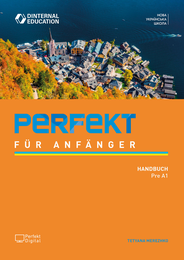
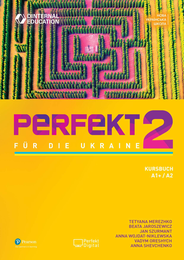
Modern teaching programmes, such as the ‘Perfekt für die Ukraine’ series (in particular the ‘Perfekt 1’ course), are produced in collaboration with leading educational experts and international publishers, including Dinternal Education. Experienced authors work on the creation of the textbooks, including Tetiana Merezhko, Beata Yaroshevych, Yan Shurman and other specialists in the field of teaching German as a foreign language.
German teaching materials are developed taking into account the age-related psychological characteristics of schoolchildren. As a result, German is easily understood, and the learning process becomes logical and consistent.
Features of the teaching methodology
In Year 2, the methodology for teaching German is based on several key approaches. In particular:
A communicative focus. Pupils begin speaking from the very first lessons, learnt through ready-made sentence patterns.
Game-based learning. The use of card games, board games and interactive exercises keeps pupils highly engaged.
Visualisation. Each new word is accompanied by an illustration to help form direct associations without the need for constant translation.
The course also includes high-quality audio material. Recordings by native speakers help students develop correct pronunciation and intonation.
Additional materials and resources
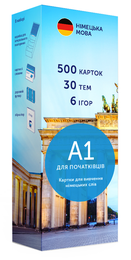
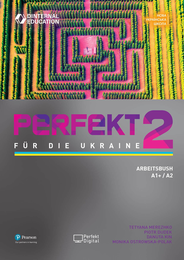
To achieve the best possible results, the Year 2 German textbooks are supplemented by a workbook, interactive flashcards and grammar guides. It is also a good idea to include German fiction in the child’s independent reading programme.
In addition to language textbooks, children’s books on art and music help to broaden a child’s horizons and develop their creative abilities, successfully complementing the school curriculum.
The managers at Dinternal Education are always on hand to help you select the right literature to suit your tastes.
FAQ
Does the textbook meet modern educational standards?
Yes, modern German language textbooks for Year 2 meet the requirements of the NUS (New Ukrainian School) curriculum and the Common European Framework of Reference for Languages (CEFR, level A1.1).
What teaching methods are used in the textbook?
The core methods are communicative, game-based and visual-associative approaches. The exercises are designed to encourage the active application of the material learnt in simulated real-life situations.
How does the textbook help to develop speaking skills?
Thanks to pair and group exercises, the repetition of rhyming verses and songs, and the use of set phrases, children easily overcome the language barrier and learn to hold simple conversations.
Can the textbook be used for self-study of German?
The textbook is designed for use with a teacher or parents. However, thanks to its clear structure, colourful illustrations and audio materials, children can complete additional exercises at home on their own.








 ArrivalsNew Sale