Learning a foreign language is always a challenge, especially when it comes to French with its distinctive phonetics, complex conjugation system and, of course, that special charm which you want to capture as accurately as possible. Success in this endeavour depends 80% on the quality of the learning materials you choose right from the start. Many people try to learn words using free apps, but a real breakthrough requires a systematic approach, which only a good French textbook can provide.
At the Dinternal Education online shop, we understand that every student has their own goal: some are preparing to move to Quebec, some want to read Hugo in the original, and others need the language for daily communication with business partners. That is why our catalogue consists of publications recognised as the gold standard of FLE (Français langue étrangère) methodology. This is literature developed by native speakers for foreigners, where every exercise and every dialogue has a clear pedagogical purpose.
Let’s talk about how to start learning the language and how to choose the best literature for this.
Start learning French on the right foundation
The first stage is the most crucial. It is at A1 level that pronunciation is established. If you ignore reading rules or articulation at the start, it will be far more difficult to relearn later. A modern French textbook for beginners must include high-quality audio, allowing you not just to see the text, but to hear the natural intonation, rhythm and melody of the sentences.
It is important that the material is presented in manageable doses. The best starter guide is one where grammar does not look like a collection of dry tables, but is woven into the context of real-life situations: how to order coffee in a Parisian bistro, how to ask for directions or make a new acquaintance at a party. This approach breaks down psychological barriers and allows you to start speaking right from the very first lessons. When you see your progress in real dialogues, your motivation to continue learning the language only grows.
Learn the language using textbooks for adults and professionals
Adult learners have their own way of processing information. It is important for us to understand the logic of the language, rather than simply memorising phrases. That is why French textbooks designed for adults focus on an analytical approach and topical issues. You won’t find children’s fairy tales — instead, you’ll be discussing the environment, digital technologies, the specifics of the French labour market, or global cultural trends.
For those planning a career in international organisations or large corporations, we offer specialised, up-to-date content. A professional training course helps you quickly build up specific vocabulary that you won’t find in general conversation guides.
The guides for preparing for the DELF and DALF international exams deserve special attention. These are certificates that have no expiry date and are recognised worldwide. By using targeted material, you are not just learning the language, but practising specific types of tasks, which is the key to achieving a high score. Anyone planning to apply to universities in France or applying for an immigration programme should consider purchasing a French language textbook of this type.
How to choose the right French textbook
The market for educational literature is quite extensive, so it’s easy to get overwhelmed by the options. Here are a few tips on how to find your ideal choice in the Dinternal Education online shop:
Determine your level. If you studied the language at school 10 years ago, it is better to start by revising the basics (A1/A2) rather than tackling complex texts straight away. Each level has its own clear criteria for knowledge.
Learning format. For lessons with a tutor, choose traditional courses with a workbook. For self-study, look for publications marked ‘avec corrigés’ (with answers) so you can check your own work.
Additional components. A good course today isn’t just a paper book, but also a digital app or a code for an online platform, allowing you to learn the language anywhere using your smartphone.
Placing an order in our online shop is as simple as possible: select the required category, add items to your basket and confirm your purchase. Delivery is prompt to Kyiv, Lviv, Odesa and any other town or city in Ukraine. The cost of the course will pay for itself after your very first successful conversation with a native speaker!
FAQ
Which French learning materials are suitable for A1 level?
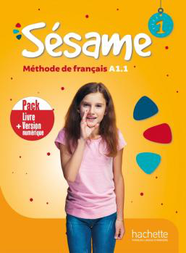
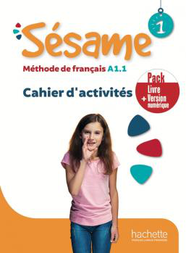
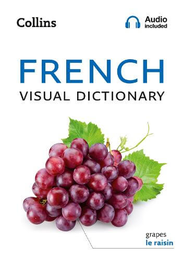
Interactive courses, such as ‘Sesame’, work best when you’re starting out. They contain plenty of visual cues, audio dialogues and logic exercises. It’s also useful to get a basic grammar book with pictures to help visualise the rules.
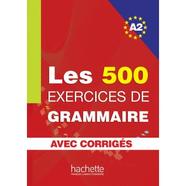
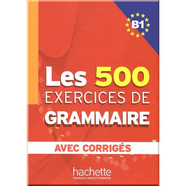
Can Les 500 Exercices be used for self-study?
This series is a real must-have for self-study. Each topic takes up a double-page spread: the rule on the left, exercises on the right. The course is affordable, so this book is perfect for everyone.
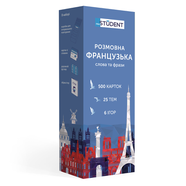
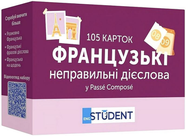
How are flashcards useful for daily vocabulary revision?
Flashcards help engage your visual memory. You can group them by topic: ‘work’, ‘home’, ‘verbs of movement’. This is much more effective than simply writing words down in a column in a notebook, as you can shuffle them and test yourself in any order.
Which textbook is suitable for exam preparation?
The ‘Les 500’ series is perfectly suited for exam preparation. It helps to structure speaking and writing skills and build a sufficiently extensive vocabulary.








 ArrivalsNew Sale