






Phrasal verbs in English

Oleksandra Kulish
Book expert
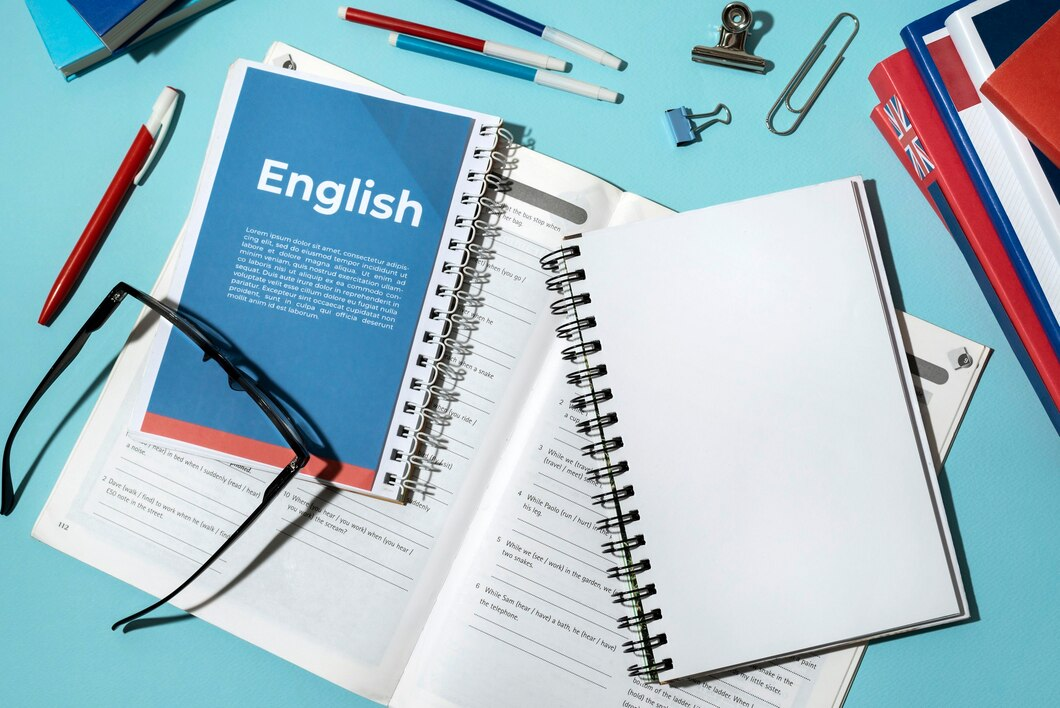
When learning English, many people encounter difficulties when it comes to phrasal verbs. And there are indeed a lot of them in the language. Phrasal verbs are especially common in spoken English, so it is impossible to sound natural without them. So, let's take a closer look at this fascinating topic and learn how to master phrasal verbs.
Explanation of the concept of a phrasal verb
A phrasal verb is a combination of a regular verb with a preposition or adverb that forms a new meaning. It is this particle — the ‘sticker’ — that creates the magic. For example:
- to turn — to rotate,
- to turn up — to appear or increase the volume,
- to turn down — to refuse or decrease the sound.
Sometimes the meaning can be guessed from the context, but often it cannot. For example:
- to break down — to break,
- to break into — to break in.
In Ukrainian, prefixes perform the same role: we say ‘йти’ (to go), ‘вийти’ (to leave), “зайти” (to enter), ‘підійти’ (to approach). In English, combinations of verbs with particles are used, which change the meaning just as radically.
Most often, phrasal verbs consist of verbs such as come, go, take, get, give, put, look, bring, call and particles such as up, down, in, out, off, away, on, back, over. Such combinations help you speak more accurately, naturally and emotionally.
Classification of phrasal verbs
Phrasal verbs in English are divided into several main groups, and understanding these categories makes it easier to use them in communication and writing. They can be separable and inseparable, transitive and intransitive, as well as literal or idiomatic. Let's take a closer look at each group.
Separable and inseparable phrasal verbs
Phrasal verbs are divided into two types according to word order:
- Separable — separable.
- Inseparable — inseparable.
- Inseparable phrasal verbs.
In such constructions, the particle (preposition or adverb) always comes after the verb:
VERB + PREPOSITION or ADVERB.
I look after my cat every morning.
We ran out of sugar.
She keeps up with all the latest trends.
Do you get along with your neighbours?
If a phrasal verb has three parts, such as come up with or run out of, it is always inseparable. - Separable phrasal verbs.
In such constructions, other words can be inserted between the verb and the particle — usually the object of the action:
VERB + OBJECT + PREPOSITION/ADVERB or VERB + PREPOSITION/ADVERB + OBJECT.
My boss called the meeting off.
My boss called off the meeting. — Same meaning, but different order.
Note: if the object is a pronoun (me, him, her, it, them), it is always placed in the middle:
VERB + PRONOUN + PREPOSITION/ADVERB
Could you pick me up at the airport?
Please, turn it down — the music is too loud.
She turned him down when he asked her out.
Both separate and unseparated forms are correct — just practise them to intuitively feel the difference.
Transitive and intransitive phrasal verbs
English phrasal verbs are also distinguished by whether they have an object.
- Transitive.
These verbs require a complement, i.e. someone or something to whom the action is directed.
To look forward to something — She looks forward to her trip to Japan.
To wake someone up — The kids woke their parents up too early.
To put up with someone/something — I don’t know how she puts up with his temper. - Intransitive.
Do not require an object — the action occurs ‘by itself’.
To break down — Their car broke down on the way to the airport.
To give in — After an hour of arguing, he finally gave in.
To come over — Why don’t you come over this weekend?
Types by meaning: literal and idiomatic
Phrasal verbs are also divided by meaning:
- Literal.
They are easy to understand by their individual parts — the meaning is almost literal:
To sit down — to sit down.
To stand up — to get up.
To go out — to leave.
To put away — to tidy up. - Idiomatic.
Their meaning cannot be guessed literally, as they have a figurative meaning:
To make up — to reconcile, to invent.
They made up after a long argument. — They reconciled after a long argument.
To pull off — to accomplish something difficult.
He pulled off a successful presentation despite technical problems. — He managed to give a successful presentation despite technical difficulties.
To opt out — to refuse to participate.
She opted out of the competition due to stress. — She decided not to participate in the competition because of stress.
To bail out — to help out financially.
His parents bailed him out when he lost his job. — His parents helped him out financially when he lost his job.
To get across — to convey a thought clearly.
The teacher got the idea across very clearly. — The teacher explained the essence perfectly.

Popular words for everyday use: a list of phrasal verbs in English
We offer you a short dictionary of phrasal verbs in English that are popular in everyday communication and are worth learning first.
|
Phrasal verb |
Type |
Example of usage |
|
Wake up |
Indivisible |
I usually wake up at 7 a.m. |
|
Get up |
Indivisible |
He gets up right after his alarm rings. |
|
Turn off / Turn on |
Separate |
Please turn off the lights before you leave. |
|
Put on / Take off |
Separate |
She put on her jacket and left. |
|
Come back |
Indivisible |
I’ll come back home after work. |
|
Go out |
Indivisible |
Let’s go out tonight! |
|
Pick up |
Separate |
Can you pick me up at the station? |
|
Look for |
Indivisible |
I’m looking for my keys. |
|
Find out |
Indivisible |
I just found out the news! |
|
Give up |
Separate |
Don’t give up, you’re almost there! |
|
Call back |
Indivisible |
I’ll call you back later. |
|
Look after |
Indivisible |
She looks after her younger brother. |
|
Run out of |
Indivisible |
We’ve run out of milk. |
|
Hang out |
Indivisible |
We often hang out at the park. |
|
Set up |
Separate |
They set up a small business online. |
Memorisation methods
Sometimes the meaning of a phrasal verb can be guessed intuitively — if you know the meaning of its components. For example, if you understand that the word back means ‘back’, it is easy to guess:
- bring back — to return;
- call back — to call back;
- move back — to return (to the previous place).
But some phrasal verbs behave like true idioms, and direct translation does not work here. For example, look after (literally ‘to look after’) means ‘to take care of someone,’ and come across means ‘to encounter something by chance.’
One of the most convenient ways is to choose one verb and learn all its phrasal forms. For example, dozens of combinations can be formed with the verb get:
- get up — to wake up;
- get together — to gather as a group;
- get away — to escape or get away on holiday;
- get through — to cope with something difficult;
- get ahead — to achieve success.
This way, you will gradually begin to see a pattern — how the meaning changes depending on the particle (up, over, away, etc.). However, you should not rely entirely on intuition: the meaning of some phrasal verbs in English is radically different from the literal translation, so check them in a dictionary.
Another approach is to learn by preposition or adverb. You can choose one particle, for example, out, which usually means ‘movement outwards’ or ‘completion of an action,’ and study all phrasal verbs with it:
- check out — to check out or leave a hotel;
- hand out — to distribute materials, money, etc.;
- run out — to run out (of food, time, patience);
- speak out — to express one's opinion openly;
- burn out — to burn out (emotionally or professionally);
- carry out — to carry out (a plan, research, order).
Another effective method is to group phrasal verbs by topic. This creates context and makes it easier to remember. For example:
- ‘Work’ — hand in (submit work), take over (assume responsibilities), keep up (keep pace).
- ‘Travel’ — set off (depart), check in (register), get on (board a vehicle).
- ‘Relationships’ — ask out (invite someone on a date), break up (separate), make up (reconcile).
- ‘Health’ — come down with (become ill), pass out (lose consciousness), work out (exercise).
However, not all phrasal verbs fit easily into a specific category. Where, for example, should we put show off or fall down? It's okay — you don't have to find a place for every word.
The main rule is practice. Don't just memorise phrasal verbs without context. The most effective way is to create your own examples. Have you learned a new expression? Make up a few sentences with it and imagine real situations. Five minutes of this practice every day, and the new words will stay in your memory for a long time.

585
0

Oleksandra Kulish
Book expert
20 February 2026

418
0
Oleksandra Kulish
Book expert
19 February 2026

960
0
Oleksandra Kulish
Book expert
30 January 2026
Study resources
Children's
Story Books
Children's Encyclopedias
Arts & Crafts
Pop Culture
Early Years
Sticker & Activity books
Christmas

Detectives for children
Sci-fi and fantasy for children
Books about religions for children
Books for children about sports
Stories and tales about animals for children
History books for children
Children's fairy tales and myths
Children's books about computers and technology
Children's comics and graphic novels
Children's classic books
Biographical books for children
Children's books about art and music
Книги о животных и растениях для детей
Adventure novels for children
 ArrivalsNew Sale