






How to write business letters in English

Oleksandra Kulish
Book expert
Correspondence in English is a standard way to communicate with partners and clients. It is important to follow a business style and avoid incorrect phrases. Business English simplifies workflows and makes communication more efficient. Let's consider the basic rules for writing official letters in English, in particular their structure, how to start and how to end a business letter in English, examples for clear and correct expression of ideas.

What are the types of business communication?
Formal business letters can be written in different styles, depending on the situation and the relationship between the parties:
- Formal is used in official correspondence with partners, government agencies, management, etc. It requires a clear structure, polite wording, and avoidance of abbreviations.
- Neutral is used in professional communication between colleagues or partners with whom you have established a trusting but businesslike relationship. It leaves room for a less formal tone.
- Informal is used in communication with people you know well, for example, colleagues with whom you have been working for a long time. This type of correspondence allows the use of colloquial expressions and abbreviations.
Business communication can have different levels of formality depending on the situation and the relationship between the parties.
Basic rules of correspondence in English
To write a good business letter, it is important to follow the following principles:
- Clarity and logic. Avoid unnecessary details, express your thoughts simply and clearly.
- Politeness. Use appropriate phrases even in difficult situations.
- Grammar and spelling. Errors in the text are unacceptable, they spoil the impression and reduce the level of trust.
- The right tone. Avoid harsh expressions, emotional coloring, and ambiguous wording.
- Personalization. Address a specific person, use their name if you know it.
- Check before sending. Reread the letter to avoid inaccuracies or mistakes.
Do not forget how to address someone formally in a letter in English correctly. We will discuss this further.
And it will definitely be useful in your workan English dictionary and a business English textbook to help you, as you can find out what words are common to business, informal, and other types of correspondence.
How to correctly formulate the subject and structure of a business letter
In business communication, it is important not only what you write but also how you structure your letter. A correctly formulated subject line immediately sets the tone and helps the recipient understand the essence, which is exactly what we need. The subject should be short, specific, and reflect the main action or issue, for example: “Request for Updated Contract Draft”, “Follow-Up on Our Meeting”, “Issue with Invoice №2567”. Avoid general phrases like “Hello” or “Important”, as they provide no context and may even end up in spam.
The structure of a business letter usually consists of several essential elements: a polite opening greeting, a brief explanation of the purpose of the letter, the main content — with facts, questions, or requests — and a closing section, where you summarize the message and indicate what actions you expect from the recipient. Such a structure facilitates information perception and reduces the risk of misunderstandings.
Useful phrases and ready expressions for business correspondence in English
To make correspondence even more effective, it is worth using a set of proven phrases and ready expressions that help sound professional and natural. If you are looking for information on how to start a business letter in English, formulations like the following are suitable:
“I hope this message finds you well,” or “Thank you for your prompt response.” A concise and polite way to start a business letter in English.
If you need to ask a question or make a request, you can use:
“Could you please provide more details regarding…”, “I would appreciate it if you could….”
For clarification or emphasizing important points:
“Just to clarify…”, “Please note that…”.
And for ending the letter, these phrases work well:
“Looking forward to your response,”, “Should you need any further information, please let me know,”, “Best regards”.
These standard constructions not only save time but also make your correspondence more professional, clear, and polite.
How to write business letters correctly

To compose a business letter, request, complaint, thank you note, or statement, you should use the effective ODAC method:
- Opening. For example: "I hope you're doing well. I'd like to talk about..."
- Details (the main part). For example: “We have examined your request and determined that...”
- Action (expected actions). For example: “Could you please confirm by Wednesday?”
- Closing. For example: "Looking forward to your response. Best regards, Ann Richmond."
The ODAC method — is a good way of writing business letters. It will help you present the necessary information clearly and logically. Also, do not forget how to introduce yourself in a business letter in English. It should be brief and informative: position, full name.
How to write negative letters correctly
Writing a negative letter is always a challenge. The right approach will help you maintain good relations. It is important to follow certain rules when writing:
- Keep a neutral tone. To soften the message, start the letter with a thank you or a positive phrase, even if you have to say no. A bad option: “We can't help you at all.” Better: “Thank you for reaching out to us. After careful consideration, we regret to inform you that we are unable to assist with your request."
- Explain the situation clearly, but without going into too much detail. Even in case of refusal, offer possible solutions or interest in future cooperation. Wrong: “We can't do this.” Correct: “While we are unable to move forward at the moment, we would be happy to reconsider the opportunity in the future should circumstances change.”
- End on a positive note, as this will help maintain a good relationship: “We appreciate your patience and understanding...”
Properly formatted emails help maintain professional and trusting relationships.
What to avoid in business correspondence
To make your letters, statements, or requests look professional, you should avoid the following
- Using abbreviations and slang (“u” instead of “you”);
- excessively emotional or harsh tone;
- informal greetings in formal letters (“Hey” instead of “Dear Mr. Smith”);
- long, difficult to understand sentences;
- lack of a subject line in the header;
- use of Caps Lock (for example, “PLEASE RESPOND ASAP” may seem rude).
Business correspondence should meet professional standards.
How to reply to a business letter in English?

Following the rules of etiquette when replying to business emails will help you maintain good relationships. In addition, you can create a positive image and a strong connection with your clients and partners. Here are the basic rules for replying:
- Promptness. It is advisable to respond within 24 hours.
- Maintain a consistent style. Reply in the same style as the letter you received.
- Gratitude for the request. Express gratitude, even if the answer is negative.
Answer all questions clearly. This will help avoid misunderstandings.
Sample business letters to help you in your work
Now let's look at examples of business statements sent via email, as well as how to sign business letters in English.
To confirm a meeting, you can write an email with the recipient's name in square brackets:
Dear [Recipient’s Name],
I wish you well. I am writing to check our planned meet on [date and time], that will happen at [location]. We look ahead to talk about [topic/agenda] and move our working together forward.
Please tell me if any changes or fixes are needed. I can't wait to see you then!
Best,
[Your Name]
An example of an email about sending documents:
Hi [Recipient’s Name],
I trust that you're fine. I am writing to submit the document as requested, [document name], which I have attached for your reference. Please let me know if you need any further information or if there is any problem with the document.
I appreciate your urgent attention to this matter. I await your response shortly.
Best,
[Your Name]
What books from the Dinternal Education store will help you improve your skills
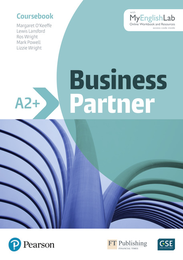
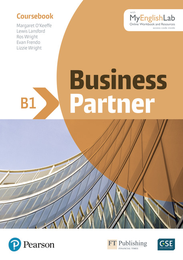
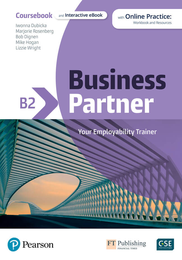
You will find many useful books in the Dinternal Education online store. Pay attention to the Business Partner and Speak Out 3rd edition series. They contain everyday situations and examples. Reading these books will help you develop effective communication skills both at work and in your personal life.
We hope that by following these tips, you will be able to write competent and effective business letters in English. The samples provided in the books will inspire you to write properly formatted letters to clients and partners. This will help you expand your professional contacts and strengthen your business relationships.
556
0

Oleksandra Kulish
Book expert
20 February 2026

409
0
Oleksandra Kulish
Book expert
19 February 2026
944
0
Oleksandra Kulish
Book expert
30 January 2026


Study resources
Children's
Story Books
Children's Encyclopedias
Arts & Crafts
Pop Culture
Early Years
Sticker & Activity books
Christmas

Detectives for children
Sci-fi and fantasy for children
Books about religions for children
Books for children about sports
Stories and tales about animals for children
History books for children
Children's fairy tales and myths
Children's books about computers and technology
Children's comics and graphic novels
Children's classic books
Biographical books for children
Children's books about art and music
Книги о животных и растениях для детей
Adventure novels for children
 ArrivalsNew Sale